Blog

  • Mexico City Restaurants – All Our Hits & Misses

    Mexico City Restaurants – All Our Hits & Misses

    By far our favourite thing about visiting Mexico was the cuisine. If you’re heading to Mexico City then we definitely recommend that you find a way to go on a food tour, because you’ll learn things and discover places that you wouldn’t have easily done on your own. But even without a guide there are many great restaurants you can find and enjoy on your own.

    So, these are our favourite restaurants, but if food is your ‘thing’ when you’re travelling then you might also want to read about our Airbnb ‘experiences’.

    Below is a list of all the restaurants we went to. We’ve put them into 3 categories, starting with our absolutely favourites and working our way down to those we weren’t so fond of. In terms of price, every place except Pujol was so affordable that it made us wonder if we shouldn’t just stay forever.

    Can’t Wait to Go Back

    • El Pescadito – This is my top food recommendation in Mexico City. I fantasize regularly about going back to this place, even though it was the site of our first earthquake experience. The tacos were so good that we actually did eat here twice on our trip. The only down side is that the tacos are so large that you cannot eat that many – though that didn’t stop us from trying. Their tacos are mainly seafood based and every option available is excellent. They also have a wide variety of salsas and hot sauces to choose from. The restaurant is open on two sides so that while you’re sitting inside you still get the fresh air and energy of the neighbourhood. There is usually a line but it moves fast. Highly, highly recommend!
    • Lardo – This restaurant was a 2 minute walk from our Airbnb, and thank goodness for that because otherwise we wouldn’t have found it. It looked good from the outside, so we gave it a try one night when our planned option fell through. We were completely blown away. The food, wine, service, and atmosphere were all excellent. It was so good that we went back again a few nights later, and it was exactly as good we’d remembered.
    • Le Tachinomi Desu – This is one of the places we went with our friends Greg and Adrienne, and we definitely recommend going here. It’s a super trendy yet welcoming sake bar, with delicious sushi to go with it. The owner imports some incredible sake that you wouldn’t be able to find elsewhere, and the bar has a really cool vibe. Highly recommend for a late night spot to enjoy a drink and late night snacks after a big dinner!
    • Pulqueria las Duelistas – the ultimate Mexico City artistic dive bar centred around a unique and ancient product: pulque. Pulque is an alcoholic beverage made from the fermented sap of the agave plant. It has been produced in Central Mexico for millennia, and was at one time considered to be a sacred drink. It has a thick, milky consistency and at this particular location they have several flavour variations available. If you’ve never had it before, it may seem like an acquired taste, but it grows on you quickly (I recommend the mango!). If you get your pulque to go they’ll put it in a cup with a lid and straw, which means you can walk around town drinking  an alcoholic beverage without drawing attention to yourself (Note: Bathrooms are a bit dodgy).

    Loved

    • Amaya – This place is a fairly trendy wine bar with a rather unique selection, and we had a great time here. It was our first full day in the city and we had a pretty packed schedule, so by the end of the night I think I was too tired to fully appreciate this place. We sat at the bar where we had a great view of all the action. The food and drinks were great and the service was friendly. Definitely recommend!
    • Meroma – We found this place by accident and were so happy that we did. It’s across the street from the Museo del Objeto, which was on the agenda during our first adventurous day in the city. After leaving the museum we were ready to eat again and we were drawn in by Meroma’s rooftop patio. The service was good, the food was delicious. We had tartare and ceviche and were blown away by the flavours and freshness. Definitely recommend this one!
    • Taqueria Los Parados – for quick and delicious tacos, this is a great place. Our friend Greg found this place while planning a Sunday night taco crawl (pro-tip: a lot of places are closed on Sunday nights) and it was the perfect second stop for our evening. It’s a straightforward concept – order & pay, watch the chef make your tacos, collect your plate from the cook, add toppings, then enjoy the savoury flavours while standing on the sidewalk or sitting at one of the tables in the back. The food felt emblematic of how we understood Mexican cuisine – even the simplest food is done with a high degree of care and quality, so it’s no surprise that the food gets better and better as you move higher end. If you’re in the area, check it out!
    • El Tizoncito – This was our last stop of the trip and it was the perfect way to wrap up a food-centric vacation. They claim to be the inventors of Tacos Al Asador so of course that’s the dish that we tried. The tacos were small which was great because then we were able to eat more than usual. The service was fast and friendly, and in they brought us a great selection of homemade salsas to enjoy with our tacos. Definitely recommend for a quick and delicious meal!
    • El Huequito – Delicious tacos, friendly service, interesting location. This was the first stop on our taco crawl and it felt like the perfect spot to meet up with our Toronto friends because it’s located under a highway, and gave us some hope that maybe one day Toronto’s Gardiner Expressway might also host charming Mexican restaurants. Not much to say here, but if you’re looking for a reliable and tasty experience, stop in. Open late!
    • Pujol – the Michelin Guide doesn’t publish a list of Mexican restaurants, but people often say that Pujol is the unofficial Michelin-starred restaurant in Mexico City. I don’t know if it’s quite up to the exacting and specific standards of other Michelin-starred places that we’ve been, but it certainly has the food quality, menu style, and price point down pat. If you look in the photos below, the majority of them are from our lunch at Pujol, where we dove in head first, trying some fairly unique wines alongside the most filling lunch that I have ever eaten. I have never felt ill from eating too much until I had this lunch at Pujol that was so darn good that I couldn’t possibly skip a course. The setting was really beautiful, calming, and relaxing. It was an impressive upscale experience with a welcoming atmosphere, and you could tell that the menu was designed to showcase their pride in Mexico’s history of excellent cuisine. Would I recommend it? Maybe. If really pricy food doesn’t scare you away, then definitely go for it. It’s certainly a great experience. However, if you’re even remotely budget conscious, you could skip it. The Mexico City food scene has so many incredible experiences to offer at lesser price points that splurging at Pujol almost feels silly. Do with that information what you will. But if you’re going to Pujol we suggest you book a reservation at least 3 weeks in advance.
    • Restaurante San Angel Inn – We ate here on the day that we went to Bazaar Sabado, we relished the fact that it was a bit over the top. The food was good but not great, but the service was lovely and the building itself was beautiful. This appeared to be a weekend destination for wealthier families, which means that lunch here made for some great people watching. If you’re not hungry for a full meal, it’s worth your while to sit in their courtyard and enjoy some cocktails.
    • Huaraches Ramoncita – This was the lunch stop on our Mexico City food tour, but if you’re feeling adventurous you can head out to the Jamaica Market (make sure to visit the flower market nearby!) where you can find this little family run restaurant. It’s essentially a food stand, with some seating available. They specialize in huaraches, which are kind of like a savoury pancake with beans inside and topped with a variety of fresh ingredients. Definitely recommend if you’re feeling adventurous. The family are incredibly kind and friendly.

    Liked

    • La Casa de Toño – This is not a place to go during the day, but if you’re looking for some late night food after an evening of partying then this is the place for you. You order by filling out a form and handing it to your friendly server, who then brings out your piping hot, fried food. If you’re with a health-conscious crowd you may want to skip this place, but for some late night carbs to stave off a hangover this is a passable option.
    • Paramo – If you don’t like waiting to eat, then this is not the place for you. This restaurant makes mezcal margaritas that I still think about, and throughout our trip I could not a place to make them quite this good. We went here with friends and the wait for a table was nearly an hour. They let you order from the bar while you’re waiting, so we did enjoy those margaritas in the lobby, but the restaurant/bar/lobby are all incredibly busy and can feel a bit claustrophobic. Still, if you don’t mind a wait, I do recommend this place for the margaritas alone. Most of the food was great, though we had a couple of lacklustre dishes. The service was also spotty, but again this place was absolutely packed, so it’s not that surprising. The ambiance is also pretty cool with lots of plants and a glass ceiling giving it a ‘greenhouse’ feel, but it did seem a bit dominated by tourists (millennial tourists like us, haha, but still tourists!). If you can plan something to do while you’re waiting, it may be worth checking out for a few drinks, but don’t bank your whole night on this place.
    • Rojo Bistrot – we found this place while walking through the city and decided to eat on the patio because the atmosphere of the neighbourhood was so pleasant and quiet. We drank cocktails and snacked on taquitos. The food wasn’t amazing but the service was fast and friendly, and it was a great little spot for some low-key evening drinks in a lovely area.
    • Comedor Jacinta – We went here with an appetite for cocktails and not much else (we were still full from lunch) so we didn’t order much food. The place had a fun atmosphere and the mezcal margaritas were quite good. It’s located in Polanco, on a street with many other restaurants, so it’s a good launching pad if you’re looking to try a few places in one night. The restaurant was quite pretty, and while one of the dishes we had was underwhelming, the appetizers were pretty tasty too.
    • El Bajio – This was a nice little lunch spot in the high end neighbourhood of Polanco. Because of the setting, it was another good spot for people watching, but the food was also great. El Bajio is a chain of restaurants focused on preserving and showcasing traditional Mexican cuisine, and on that front it definitely delivers. It doesn’t have the quirks of a little restaurant tucked into some back alley, but it was pretty great regardless. The restaurant’s story is also pretty cool, and it’s considered one of the most famous/successful restaurants in the country.
    • Cafe de Tacuba – A gem in a very busy/touristy area, where you likely won’t have to wait. This place is enormous, and its historical location makes for a great setting. The staff are friendly, the food is delicious, and ambiance is delightful. When we were there it was a very busy Sunday yet we sat right away. It seems like the type of place where families go together, and it was great to be part of that atmosphere. There may be better or trendier places, but this is reliable classic in the historic centre of Mexico City.

    We Went, But Wouldn’t Recommend

    • El Califa – We saw this place on a few different ‘recommendation’ lists and decided to try it out for a quick lunch. It was good, but nothing particularly special. El Califa is a chain of restaurants that makes tacos and other Mexican dishes. In a city where the street food is sometimes better than restaurant food, a chain of taco restaurants just feels overly sanitized and boring. The food was good, but the experience overall is underwhelming and a tad pricy. If you need a quick bite in a large space (with AC), this is a good option, but if you’re looking for something more unique then maybe look elsewhere.
    • Cedron – The food was good, but the restaurant overall was a bit pretentious. We stopped here for dinner before our trek to the Cineteca Nacional to view the Shape of Water. So maybe we were just in a rush to get our night started, but this place fell a bit flat. Because we are extremely fortunate and get to have many ‘fancy’ experiences, we’re fairly attuned to when a restaurant or venue is trying to cater to a clientele who really want to feel like they’re having a luxurious experience. Sometimes it works. But sometimes you’re getting a lot of flashy luxury with little quality beneath it all. That’s kind of what this place felt like. The food was okay, but the style of service was over the top, and it was one of the more expensive places we went to. Not a bad place, but definitely not our favourite. In Mexico City, where the food is just so consistently good, putting on airs to stroke the ego of the wealthy only creates a distraction.


  • A Sunday in CDMX & Visiting Palacio Belles Artes

    A Sunday in CDMX & Visiting Palacio Belles Artes

    CDMX refers to La Ciudad de Mexico… known in English as Mexico City. CDMX refers to the municipality that encompasses Mexico City, home to nearly 22 million people. On Sundays, many of those people have the day off, and the downtown core is filled with people and families who come in search of festivals, entertainment, and relaxation.

    This was our second full solo day (and our first day waking up fully rested) in Mexico City, so we were feeling ready to explore. If you’re someone who doesn’t like crowds, then exploring the old downtown of Mexico City might not be the best call on a Sunday, but we had a lot of fun.

    One thing we hadn’t expected was how much we would be affected by the city’s altitude. For the first few days we staved off headaches with Advil, and we both experienced some difficulty breathing. The day’s heat didn’t help, and by mid-afternoon we were ready for a break.

    We started by visiting Mexico City’s famous art deco landmark, the Palacio de Belles Artes. The Palacio de Belles Artes is near the historic centre of Mexico City, and has been a site of cultural activity for thousands of years. In Pre-Hispanic times it was a site of Aztec altars for worship. Under Spanish colonial occupation, the site was home to a convent, which later was torn down to construct low income housing and textile mills. In the late 1800s, the National Theatre was built on this site, the nearest predecessor to today’s Palacio de Belles Artes:

    The old theatre was demolished in 1901, and the new theatre would be called the Gran Teatro de Ópera … Despite the 1910 deadline, by 1913, the building was hardly begun with only a basic shell. One reason for this is that the project became more complicated than anticipated as the heavy building sank into the soft spongy subsoil. The other reason was the political and economic instability that would lead to the Mexican Revolution.

    The project would sit unfinished for about twenty years. In 1932, construction resumed under Mexican architect Federico Mariscal. Mariscal completed the interior but updated it from Boari’s plans to the more modern Art Deco style. The building was completely finished in 1934.

    The floors between the ground floor and the uppermost floor are dominated by a number of murals painted by most of the famous names of Mexican muralism.[7]

    On the 2nd floor are two early-1950s works by Rufino Tamayo: México de Hoy (Mexico Today) and Nacimiento de la Nacionalidad (Birth of Nationality), a symbolic depiction of the creation of the mestizo (person of mixed indigenous and Spanish ancestry) identity.[2]

    At the west end of the 3rd floor is El hombre controlador del universo (Man, controller of the universe- known as Man at the Crossroads), originally commissioned for New York’s Rockefeller Center in 1933. The mural depicts a variety of technological and societal themes (such as the discoveries made possible by microscopes and telescopes) and was controversial for its inclusion of Lenin and a Soviet May Day parade. The Rockefellers were not happy with the painting and the incomplete work was eventually destroyed and painted over. Rivera recreated it here in 1934.[2][7] On the north side of the third floor are David Alfaro Siqueiros’ three-part La Nueva Democracía (New Democracy) and Rivera’s four-part Carnaval de la Vida Mexicana (Carnival of Mexican Life); to the east is José Clemente Orozco’s La Katharsis (Catharsis), depicting the conflict between humankind’s ‘social’ and ‘natural’ aspects.[2]

    The part above about the murals is quite important because that definitely was the main focus of our visit (as you’ll see in our photos). After our day exploring all types of art at Bazaar Sabado, it was quite exciting to see some of the country’s historic art. But more than that, it was interesting to see how many other people were there admiring the art with their friends and families. It wasn’t hard for us to recognize that the artistic talents and passions on display at the Bazaar were in some way related to the same passion and appreciation for arts that brings thousands of families to the Palacio to view these same murals.

    After spending a few hours at Belles Artes we went for lunch at Cafe de Tacuba, famous for their mole sauce (pronounced mo-lay). The restaurant is located in a former convent and has been open since 1912, so in addition to the delicious food it’s also beautiful just to see.

    With full stomachs, we walked to the historic centre of Mexico City:

    The historic center of Mexico City (SpanishCentro Histórico de la Ciudad de México), also known as the Centro or Centro Histórico, is the central neighborhood in Mexico CityMexico, focused on Zócalo or main plaza and extending in all directions for a number of blocks, with its farthest extent being west to the Alameda Central.[2] The Zocalo is the largest plaza in Latin America.[3] It can hold up to nearly 100,000 people.[4]

    What is now the historic downtown of Mexico City roughly correlates with the ancient Aztec city of Tenochtitlan, which was founded around 1325. During the prehispanic era, the city developed in a planned fashion, with streets and canals aligned with the cardinal directions, leading to orderly square blocks.[5]

    After the Spanish conquest, this design remained largely intact, mostly due to the efforts of Alonso Garcia Bravo, who supervised much of the rebuilding of the city. This reconstruction conserved many of the main thoroughfares such as Tenayuca, renamed Vallejo; Tlacopan, renamed México Tacuba, and Tepeyac, now called the Calzada de los Misterios. They also kept major divisions of the city adding Christian prefixes to the names such as San Juan Moyotla, Santa María Tlaquechiuacan, San Sebastián Atzacualco and San Pedro Teopan. In fact, most of the centro historicos is built with the rubble of the destroyed Aztec city.[5]

    Historically, the Zócalo, or main plaza, has been a venue for fine and popular cultural events.

    Just off the Zócalo are the Palacio Nacional, the Cathedral Metropolitana, the Templo Mayor with its adjoining museum, and Nacional Monte de Piedadbuilding. The Palacio Nacional borders the entire east side of the Zocalo and contains the offices of the President of Mexico, the Federal Treasury, the National Archives as well as murals depicting pre-Hispanic life and a large mural filling the central stairway depicting the entire history of the Mexican nation from the Conquest on.

    There was some kind of festival taking place, in addition to a large market, so the Zocalo was packed with people participating in and watching the festivities.

    Here’s a short video from the day, though it doesn’t really capture the scale of the area or the crowds:

    Check out our favourite photos from the day below!

  • Visiting Zona Arqueológica Palacio Atetelco

    Visiting Zona Arqueológica Palacio Atetelco

    Hello readers! It’s been a long hiatus, but I’m picking up where we left off, with stories from our 2018 trip to Mexico. My last post was about our trip to Teotihuacan, and this post is about another nearby site.

    While the site of Teotihuacan included some housing, it was primarily a centre for celebration, for exchange, and other community based activities. But those who participating in the civic life of Teotihuacan often lived in one of the many apartment complexes in the surrounding area (read more here). Which makes sense, because it took us less than 20 minutes to walk from the Teotihuacan city centre to Palacio Atetelco.

    In 2018 Kevin started getting into archaeology, and research for our trips to Mexico and Portugal involved him studying niche blogs and Google Maps satellite views in search of rare sites to visit.

    Without too much trouble, he found out about Palacio de Atetelco, just a brief walk down the block.

    After finishing up at Teotihuacan, we followed our map and walked through a small, remote neighbourhood on the way to our next adventure.

    When we arrived we were greeted by an INAH sign, letting us know that we had indeed found a site recognized and protected by the Mexican government’s institute for history and anthropology. As we entered the property we could see that the researchers were taking their lunch break under a tree, and no one said a word to us as we walked over to and then explored the site. While the site was excavated in the 1940s, it would appear it’s going through an additional exploration and update, possibly to better preserve some sections.

    And so we spent approximately an hour exploring the ruins of a housing complex that dates back to between 450 and 650 AD. It is most famous for its well-preserved murals (read more here), which were easy to spot due to their red colouring, though originally they would have included more colours that have since been lost.

    Afterwards we walked back through the neighbourhood to the visitors centre for Teotihuacan, where we flagged down an Uber driver and got a ride back into Mexico City for a well-deserved lunch.


  • Visiting Teotihuacan

    Visiting Teotihuacan

    Kevin did 90% of the research for our trip to Mexico City, and I could tell it was going to be a good trip because of how excited he would get about what he was reading.

    When he suggested that our trip include a day trip outside of the city I knew that we were in for something great because he’s well aware of my distaste for travelling within trips.

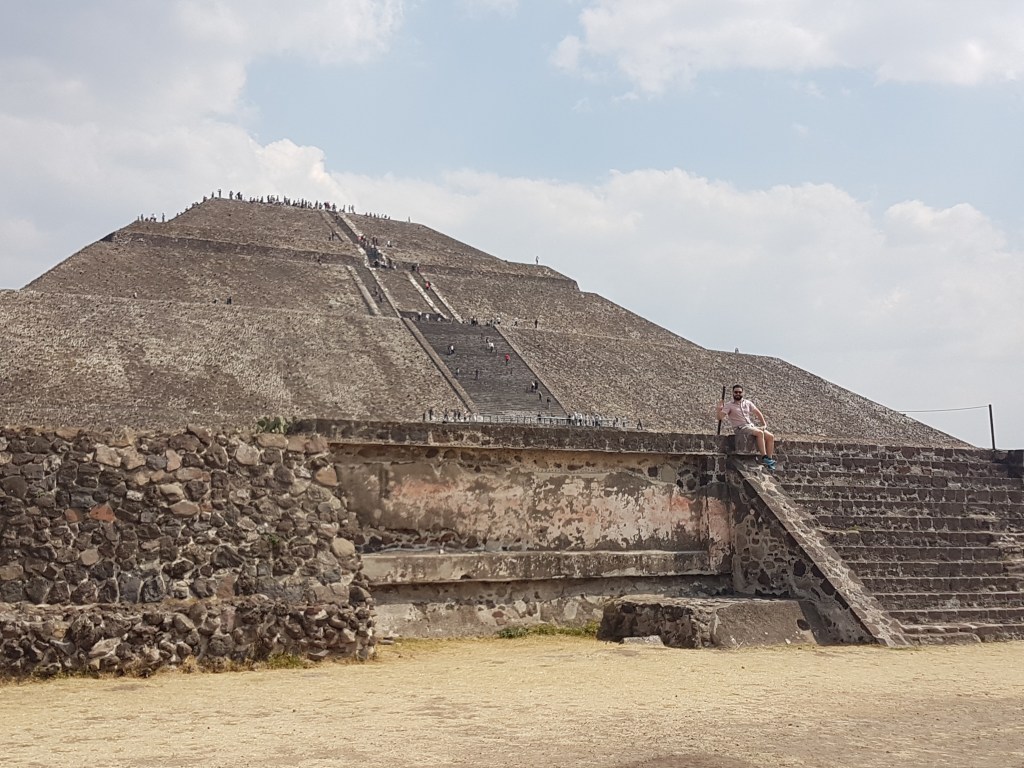
    Indeed, our day visiting the ancient Mesoamerican city of Teotihuacan was well worth the trek to get there. It was also one of the first things we did on our trip, and it set us up well for a week of learning about the incredible culture and history that have occurred on the lands of present-day Mexico. We were able to Uber there, and then found another Uber to drive us back later.

    Our day included a lot of walking and climbing, but you can easily enjoy the site without climbing the pyramids. If you go, be sure to bring a hat and some sunscreen. We also went on Monday so there were relatively few tourists. We’ve been told that Sunday is the busiest day to visit.

    Around 1200 CE, the Mexica were moving in search of a new location where they could establish a settlement and build a city. Along the way they found the remarkable site of Teotihuacan and they claimed a common ancestry with the city’s ancient founders. So, that’s how ancient and significant Teotihuacan is: some 800 years ago a power community found it and were so impressed that they took on some of city’s mythology and worked it into their own origin story.

    When most Canadians talk about pre-European peoples in Mesoamerica, the most prominent group mentioned is called “the Aztecs”. However, “Aztec” is a term coined by a European researcher. The Aztec Empire began as an alliance between 3 city-states in the Central Mexican Valley, and the most influential of these 3 group were actually known as the “Mexica” (pronounced May-Shee-Ka). The language that they spoke, Nahuatl, is still spoken in Mexico today, and many Nahuatl words have been incorporated into Mexican Spanish. In fact, some Nahuatl words are even spoken in the Philippines (more on that in a later post).

    So, what’s all the hype about?

    Well, before you ask, let me assure you that this site was not built by aliens.

    Teotihuacan, founded approx 2000 years ago, is the site of the largest pyramids outside of Egypt and was once a city home to over 125,000 people (some estimates suggest closer to 250,000). Such a large city was hub for trading and exchange and its cultural and economic influence appears in archaeological digs and cultural sites across Mesoamerica.

    Further details about its exact origins, who built it, etc are unclear, and there some different competing theories. However it is a rich archaeological site and researchers have been able to learn a lot about how life was live in this community. Their importances as a trading centre has helped researchers build a clear picture of the various groups living and trading across the Mesoamerican region at that time.

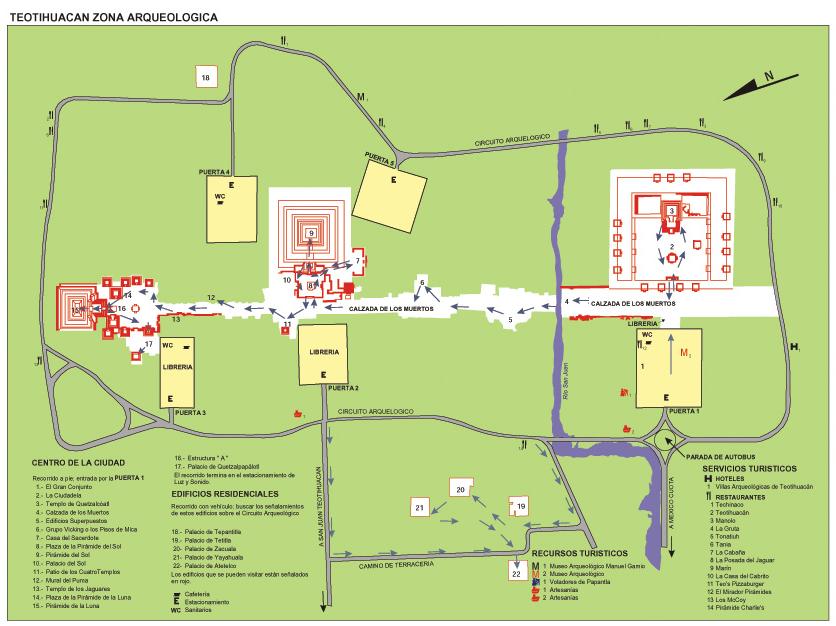
    Here’s a map of the site. The arrows show the recommended route through the site, which is exactly what we did:

    Teotihuacan_Archaeological_Area_Map_Edo_Mexico (1)

    Here’s what Wikipedia has to say about the site layout and design.

    The city’s broad central avenue, called “Avenue of the Dead” (a translation from its Nahuatl name Miccoatli), is flanked by impressive ceremonial architecture, including the immense Pyramid of the Sun (third largest in the World after the Great Pyramid of Cholula and the Great Pyramid of Giza). Pyramid of the Moon and The Ciudadela with Temple of the Feathered Serpent Quetzalcoatl are placed at the both ends of Avenue while Palace-museum Quetzalpapálot, fourth basic structure of site, situated between two main pyramids. Along the Avenue are many smaller talud-tablero platforms also. The Aztecs believed they were tombs, inspiring the name of the avenue. Scholars have now established that these were ceremonial platforms that were topped with temples.[citation needed]

    The Avenue of the dead is roughly forty meters wide and four Kilometers long.[64] Further down the Avenue of the Dead, after small river, is the area known as the Citadel, containing the ruined Temple of the Feathered Serpent Quetzalcoatl. This area was a large plaza surrounded by temples that formed the religious and political center of the city. The name “Citadel” was given to it by the Spanish, who believed it was a fort. Most of the common people lived in large apartment buildings spread across the city. Many of the buildings contained workshops where artisans produced pottery and other goods.

    While a lot is known about the site and its various inhabitants there is still much to learn. A recent discovery was made and we got to see the tent where they were continuing to explore it. Kevin insists that you read this article about it.

    Our path through the site also included a journey through their museum, which helped us get a better understanding of what we were seeing. We were impressed with the breadth of material on display and how well it was curated.

    Below you can see all of our photos from our visit to Teotihuacan, though it’s hard to do it justice. If you ever get the opportunity to go to Mexico City then I strong encourage you to make a trip out to visit this incredible historical gem!


  • Heather & Kevin’s Guide to Portugal

    Heather & Kevin’s Guide to Portugal

    Kevin and I have spent a lot of time travelling through Portugal, and we often encounter friends and friends of friends who are in search of suggestions for what do while they’re visiting Portugal.

    We’ve written quite a few tailored suggestions, and we’ve decided to combine all of our recommendations right here, in one place. Enjoy!

    How to use this guide: 

    In the first section below you’ll find some general advice about travelling in Portugal. Following that we’ve listed towns are cities that we recommend visiting, along with things to see/do/eat in each city.

    The cities are listed in Geographical order from North to South, then West to East.

    For each city and restaurant, we’ve also provided a score out of 5 for how worthwhile it is to visit:

    • 1/5 = if you happen to be there, check out these places
    • 2/5 = these are some great places, but don’t travel far to visit this place
    • 3/5 = this is worth it if you’re really interested in this topic
    • 4/5 = very worth adjusting your route for, if you can swing it.
    • 5/5 = get in your car and go now!

    Comment below if you have questions about any of the suggestions, or if you have clarifications/new ideas to offer!

    Things to know in general in Portugal:

    • Breakfast is hard to come by. The idea of brunch or breakfast being eggs, toast, etc, doesn’t exist in Portugal. Breakfast is an espresso and a pastry. In Lisbon you can get different types of ‘toast’ with a coffee (we’ll recommend below). But in the Algarve, a typical big breakfast is hard to find.
    • Lunch is typically served between 11am and 3pm. If you want to eat between 3pm and 5:30pm, good luck. Most restaurants are closed at that time, but reopen for dinner.
    • When you sit down at most Portuguese restaurants, they’ll put bread, pate, olives, etc on the table. If you eat these, the cost will be added to your bill. If you’re not interested, you can ask them to take it away, no problem.
    • Espumante is the word for Portuguese sparking wine (like Spanish Cava or Italian Prosecco). Be sure to try some while you’re there, as it’s rarely found outside of the country.
    • Common greetings include “bom dia” (good day or good morning), “boa tarde” (good afternoon), “boa noite” (good evening).

    Exploring Portugal

    Sintra and the surrounding area (Northwest of Lisbon)

    Lisbon

    • Our score: 4/5
    • Like any place in Portugal outside of Lisbon, you will need your car to explore Sintra. Even if you’re only in Lisbon on your trip, it’s worth renting a car or booking a tour to visit Sintra. We saw all of Sintra & its sites in one day, but it would definitely be worthwhile to split the whole thing into 2 days and stay up there one night.
    • The easiest way to describe Sintra is to list my blog posts about each site. I don’t really have any restaurant recommendations out there:
      • Cabo da Roca (edge of continental Europe) – spend 30 minutes there; There’s also a restaurant here with beautiful views of the ocean.
      • Convento of the Capuchos – Spend at least 1 hour there. Max 2 hours.
      • Moorish Castle and the Palace of Pena – spend at least an hour at each, possibly 2-4 hours at each. The Moorish Castle is a bit of a hike, and the views are stunning. The Palace of Pena has more to see indoors, and also boasts a beautiful set of gardens. You could spend 1-3 hours at each site.
      • Quinta da Regaleira – You could easily spent 2-4 hours here. The gardens are incredible. We went there in the rain which gave the whole experience a romantic, nature-y feeling, but for the sake of comfort, try go to there in good weather. It’s not as historically significant as the 2 castles but it’s much more interesting and surprising to explore.
      • A note on our order of things… Cabo da Roca is on the west coast. Coming towards the interior, Convento dos Capuchos is next closest. The Quinta, the Castle, and the Palace are all roughly in the same area, within “Sintra”. Sintra itself is a town, but we didn’t spend much time there, so cannot make any recommendations.
      • Bring your walking shoes because you’ll be walking and climbing all day long. A hat and sunscreen may also be wise, especially for the Moorish Castle.

    Lisbon

    2015-04-07 13.58.58
    With the famous Lisbon cable car in the background. Worth a ride if you have time available!
    • Our score: 5/5
    • Lisbon is one of my favourite cities to visit. Like many cities in Europe, it is historical and gorgeous. The architecture and the intricate design of its many buildings and squares show the extravagance of its spending at height of the Portuguese empire, and reflect the restrained budgets of modern governments. Keep an eye out for fancy old buildings that are maintained and/or newly restored, and those that are falling apart. In addition to its beauty, Lisbon offers incredible food, people, views, and nightlife.
    • Lisbon is a city built on hills, which is an important part of its design and history. Keep an eye out for its streetcar system and its elevator… both the oldest in the world.
    • You can read about our experiences in Lisbon here, here, here, and here.
    • Overall we love Lisbon because of its beauty, delicious food and wine, and welcoming hospitality.
    • Places we’ve stayed:

      • VIP Executive Arts Hotel – has parking, is close to the airport, in a new part of Lisbon. Not close to the downtown if you’re walking, but a cab to the downtown is around 12 euros
      • Travel & Tales AirBnB – These guys have an apartment building in the Principe Real neighbourhood of Lisbon. The apartment is super gorgeous and they are great guys. They have an office on the main floor of their building and are easily available if you need any help.
    • Restaurant recommendations:

      • Sea Me (4/5) (for lunch) – the classic example of Lisbon cool. At once incredible cool, high quality, and unpretentious/relaxed. Great for lunch.
      • Cervejaria Ramiro (5/5) – This place is AMAZING. It’s famous for it’s amazing selection and quality of seafood. The concept is similar to a food hall in that you grab a seat at a shared table and the servers turn out your order quickly. There will almost certainly be a lineup and wait. We waited for 15 minutes, but your wait could be much longer. We suggest to order the shrimp, the clams, and goose barnacles (percebes). The lobster is also good. Everything there is good. Highly recommend.
      • Stanislav Cafe (formerly Stanislav Avenida) (4/5) – Back in the day, this was a really good Russian restaurant where we went for dinner. The pierogies and the steak tartare were our favourites. The service was excellent, and once again the restaurant itself was beautiful.
      • Bistro Edelweiss (2/5)- If you’re in the Principe Real neighbourhood and you’re looking for a restaurant with quality food, this is a good option. As you can surmise, they’re a German restaurant. The restaurant and service are both charming. Portugal is full of places that are overshadowed, yet still interesting and high quality. This is one of them.
      • Mercado da Ribeira (3/5) – In an area historically known for shipping, TimeOut turned a warehouse into a high end food court/food hall. Different top restaurants/chefs in Lisbon have fast food stalls here, so it’s a good way to explore the range of cuisine in Lisbon. As far as dining experience goes, it’s not ideal, but like everywhere in Portugal, they serve beer and wine.
      • Belcanto (3/5) – If you’re interested in fine dining, this is apparently the one to try. We haven’t tried it but it’s recommended by a trusted friend who vouched for its quality, especially given the price.
      • Esplanada Cafe (4/5) – This is a cafe located in the Jardim do Principe Real. It’s a great spot for breakfast, as it’s basically a greenhouse cafe in a park. For a satisfying snack we suggest you order a tosta mista, which is sort of like a grilled cheese open-faced sandwich.
      • Manteigaria (5/5) – Across the street from Sea Me, this is one of the best pastry shops in downtown Lisbon. Stop in for an espresso and a custard tart, and watch the bakers move through the motions of making pestels de nata in mass quantities. Dessert and a show!
      • Cantinho Lusitano: (?/5) We haven’t been here but it’s always been on our list. We always seem to be in Lisbon when it’s closed or very busy. Try it out for classic Portuguese cuisine!
      • The Mill (4/5) – This is a wine bar/snack bar owned by a friend of ours (Madeline) and some friends. You can definitely get breakfast here.
      • ‘The Nuns’ Canteen’ (Associação Católica Internacional ao Serviço da Juventude Feminina – ACISJF) (3/5) – If you’re looking for a great view on a budget, this is the place for you. This Guardian article mentions a canteen/cafeteria run by nuns where one can grab a cheap lunch with a great view, and it’s exactly as great as it sounds. Enter through the doorway in an alley and head up to the third floor. You’ll find a well-priced traditional Portuguese lunch, while overlooking the Tagus River and the Chiado neighbourhood. Address: Travessa do Ferragial 1, +351 213 240 910
      • Tapas Bar 52 – We’ve only been here for drinks but it has been described by a very trusted source as one of the best restaurants in Lisbon. Located in the beautiful neighbourhood of Principe Real.
    • Bar recommendations:

      • Casa Independente – we went here on our 2019 trip to Portugal, and right after we got back this neighbourhood was ranking by TimeOut as the world’s coolest neighbourhood. A very charming and cool arts and cultural centre that has a lovely bar tucked away upstairs. Lisbon is full of places that feel like a secret oasis and this is one of them. We went in the afternoon but it seemed like it would be quite the hoppin’ place at night. Definitely recommend!
      • Foxtrot – A secluded little bar with a really cool art nouveau design. Perfect for a late night drink in a dark corner.
      • Pavilhao Chines – this place is pretty bizarre. Drop in for a drink to check out all the knick knacks they’ve collected here. It’s pretty hilarious.
      • Pub Lisboeta – down the street from Pavilhao Chines. A cute and clean place that makes solid drinks at great prices. In a very popular and lovely area of Lisbon as well.
      • Kiosks – there are little kiosks on the streets all over Lisbon. Some have tables and chairs in a little patio area. All serve coffee and pastries, and these are definitely part of Portuguese “breakfast” culture. Most also serve alcohol, and many straight up serve sangria, cocktails, etc. These are Kevin’s 2 favourite kiosk spots:
        • Largo do Carmo (beside a church, near the top of the elevator)
        • Bambu (on Avenida Liberdade, the main boulevard in Lisbon)
      • Pensao Amor – A really cool bar with a burlesque theme. Very laid back with couches, etc. You can chill out and have a drink. Great cocktails. This is a fairly unique place, and there are many other late night spots nearby.
      • Clube de Fado – while in Lisbon you *definitely* want to go to a Fado bar. Fado is traditional Portuguese music, and it’s unlike anything else. This is the best place to go for a show. There’s actually a Moorish well in the corner of the performance room.
      • Be sure to visit a neighbourhood called Bairro Alte where you can climb the steps in the neighbourhood to explore the many small bars and clubs. You can grab a drink at one place and enjoy it as you continue to explore the rest of the street.
    • Sites to see:

      • In the City of Lisbon:
        • Walk around the city to explore the various squares
        • Neighbourhoods you must see, in the downtown, include Chiado and Bairro Alte – these 2 neighbourhoods have great nightlife, with lots of bars, people in the streets, etc.
      • Just outside of the city:
        • Jeronimos Monastery
          • The monastery has a free-entry church you can visit. It’s all in the neighbourhood of Belem. Down the street, you can go to the original Belem pastry cafe, which is where Portuguese custard tarts were invented! There will be a huge line out front for  counter service. Go inside and get table service, and the wait will be shorter. There is a massive seating area inside and the service is quick.
        • Near the Jeronimos Monastery there are lots of other things to see along the waterfront. Give yourself 2-3 hours to walk along the waterfront and enjoy the view.
        • Pasteis de Belem – the bakery that claims to have invented Portuguese custard tarts is located in this area. You can wait in line to buy pasteis at the counter or you can go into the large table seating area in the back where there’s table service.
        • Oceanario de Lisboa – if you’re interested in science and/or wildlife, this is a great aquarium to visit. Well-curated, educational, and lots of fun.
      • You can read all about our Lisbon adventures here, here, here, and here.

    Interior of Portugal, Northeast, East, and Southeast of Lisbon

    interior

    • Pioadao

      • Our score: 5/5
      • A truly magical place, if you’re comfortable with driving on winding roads. If you’re into driving, then this trip is worth seeing it for the journey and the destination. Read about your trip right here.
      • Piodao isn’t exactly on the way to anywhere, which is certainly why it’s as special as it is. If you’re driving from Porto to Lisbon (approx. 3 hours) and don’t mind adding an additional 3 hours of driving to your trip, it is well worth it. The best route, in our opinion, is to drive southeast from Porto, to Piodao, and then on to Marvao.
      • Piodao is one of the most beautiful and unique places we’ve visited in Portugal. It is a harrowing drive to get to this romantic and stunning little town, which is likely why they were isolated and without electricity into the 1970s. The homes are made of a stone called xist, which looks similar to slate. The town sits in a valley, and there’s nothing quite like listening to the bells of a heard of goats echoing off the hilltops. Highly recommended for a unique adventure.
      • Our visit here was relatively brief. We don’t have any recommendations for food or hotel, but there is a significantly sized hotel in town and what looked like some cute restaurants.
    • Tomar

      • Our score: 3/5
      • If you’re interested in history, particularly European medieval history and the Knights Templar, this is worth visiting. Now a small town of roughly 2000 people, Tomar was once a large and important trading centre that played a central role in some of the most notable periods in European history.
      • The town itself is lovely and quiet, with beautiful architecture. The site that you want to visit is the Convent of Christ, which is famous for being the last home of the Knights Templar in Portugal. With the expulsion of the Knights Templar, the convent evolved under the influence of various subsequent influential groups. It’s one of the better curated sites that we visited in Portugal, and you could easily spend 3+ hours here.
      • We were there for only one night. We stayed at a great Pensao, which is essentially a b&b with Portuguese hospitality (i.e. amazing spread for breakfast, 24/hour check-in). We ate a pretty good dinner at a medieval themed-restaurant, but there are a variety of food options in the city.
      • Also, there’s an aqueduct nearby
      • Tomar is about 90 minutes away from Lisbon, and you can easily visit it on the way to Porto. Tomar is about 2 hours south of Porto, and may be a good place to stop for a break on the way to Lisbon.
    • Marvao

      • Our score: 5/5
      • Another magical place. Marvao is a medieval city on the Eastern border of Portugal, beside Spain. It is a walled city that sits on top of a hill that has been a natural frontier between peoples since the 4th century BCE.
      • If you’re looking for a unique stop on the way from Porto to the Eastern Algarve (or even Spain), this is it. We arrived at night, parked outside of the town and walked in through the walls. We had dinner and then walked around in fog and moonlight. It almost felt like time travelling; it was beautiful and eerie and romantic.
      • In the morning after breakfast we explored the Castle of Marvao as clouds of fog rolled across the Portuguese-Spanish border. You could imagine people experienced the exact same view 1000 years ago.
      • If you’re travelling from Porto to the Algarve but you don’t want to go through Lisbon, you can stop off in Marvao instead. The drive from Porto to Marvao would take around 3.5 hours.
      • You can read about our trip to Marvao here.
    • Evora

      • Our score: 3/5
      • Evora is great if you’re into history and if you’re into food
      • This city has been continuously inhabited for more than 2000 years and thus is home to a wide variety of historical sites, including some ancient Roman ruins.
      • If food is your thing then you’ll want to stop in for lunch at an incredible lunch restaurant that only serves 9 people at a time. “Botequim da Mouraria” is run by a welcoming Portuguese couple. In their small restaurant, there’s bar seating only, which means that you’d best be there early to lineup for a seat, or aim to go on a weekday.

    Getting from Lisbon to the Algarve – The Fast Route

    • The fastest route to drive from Lisbon to the Algarve is via the A2, a toll highway that gets you from Point A to Point B in less than 2 hours. Still, after a flight and an hour of driving you’ll be ready for lunch. Before getting to the Algarve, we recommend you stop in a small Alentejo town called Ourique for lunch.
      • Restaurant Adega do Monte Velho
        • Address: R. Batalha de Ourique 33, 7670-261 Ourique, Portugal
        • This is another our favourite spots in Portugal. The Alentejo is famous for its ‘porc preto’ or ‘black pig’, which roam (relatively) freely and snack on hazelnuts, giving their meat a unique and delicious flavour. Order the porc preto with batatas fritas y saladas des tomates (black pig with fries and tomato salad). Food this good and this well-priced is the perfect way to start your trip to the Algarve.

    Getting from Lisbon to the Algarve – The Scenic (Slow) Route

    • We did this drive a few times. The best option is to map it out on Google Maps, but select the “avoid highways” option. This will get you on a rural highway that goes up the western Portuguese coast, in particular an amazing drive through the interior of the Algarve and into the Alentejo (a very provincial, farm filled region of Portugal). There are some really gorgeous sites and views to be had along here, along with an amazing seafood restaurant.
      • Stop for lunch at Restaurante Azenha do Mar
        • Address: 7630-564 Azenha do Mar, Portugal
        • This restaurant is one of our favourites in the Algarve
        • Our best advice is to order the crab and the percebes (goose barnacles) if they have them.
        • Get there in time for the lunch open at 12pm otherwise you’ll be waiting in line.
      • Read about our roadtrips here and here.

    Places to Visit in the Algarve (Ordered from West to East)

    algarve

    • Sagres

      • Our score: 2/5
      • Sagres is a coastal town, and is the most south western point of the continental Europe. There is a fort there you can see, but there’s almost no educational information on site. The views from the coast are worth it, but if you’re keen to learn history, study up before you go (most Portuguese museums are low on information in this way)
      • Restaurant recommendation: A Sagres
        • This places serves incredible fresh seafood dishes
        • Order the special of the day…
        • Good things we had here: Clams are a must, percebes (goose barnacles), a fish/shrimp stew with pasta, and of course, their grilled sea bream.
      • Read about our trip there.
    • Carveoiro

      • Our score: 4/5
      • Faro is east of the centre of the Algarve. Alte is pretty much in the centre. As you go more west, towards Sagres, you’ll go through Carveoiro. It’s a gorgeous seaside town. I’ve only been there for dinner, but Kevin has been in the day and he says the beaches are beautiful.
    • Silves (Northeast of Carveoiro)

      • Our score: 3/5
      • Silves was a majorly important site and city back when Portugal was under Moor-ish control, and after that time as well. Silves is a wonderful and historic town, and it boasts the Castle of Silves. Well worth seeing!
      • Castelo do Silves (the Castle of Silves) is a beautiful place to visit. The museum is fairly informative and the castle itself is open enough that you can explore as much of it as you’d like. Naturally, it also contains a cafe where you can enjoy the sunshine and a beer while sitting in a castle that’s over a thousand years old.
      • Read about our trip to the castle here.
    • Alte

      • Our score: 5/5
      • Alte is a small town in the interior of the Algarve. Kevin’s grandparents are all from within 10km of here, and his grandmother currently lives there (this is where we stay when in Portugal). There is actually a hotel here, up in the hills, if you’re interested (Hotel d’Alte).
      • It’s famed as one of the most “traditional” or “typical” villages in the Algarve. In addition to being a really cute town, it also has a stream running through it, with public pools and spaces built in/along the stream that runs through the town. These are called the “Fonte Grande” and “Fonte Pecana”
      • Things to do:

        • Walk around the town and take photos of the beautiful buildings and cobblestone streets
        • Check out the churches, one of which is 500 years old
        • Go to the Fonte Pecana and then walk from there to the Fonte Grande.
      • Places to eat:

        • Agua Mel Cafe (4/5) They make the best pastries in town, and the best espresso. They make a pastry that is specific to Alte, called the “pastel d’Alte”. They also bake a lot of the pastries served at local restaurants. Along the back of the restaurant is a large balcony that offers stunning views of the valley.
        • Fonte Nova Snack Bar (5/5) – This is our favourite place toOrder whatever is the special. Do not even open the menu. The food is insanely good and well priced. The owner is ‘Ze, and his son is Tiago. Both have known Kevin his whole life.
        • Marreiros (5/5) – This restaurant is located just outside of Alte (37.276088, -8.228469). Carlos is the name of the owner his restaurant offers one of the best (and best value) meals in the Algarve. All meat and veggies are organic, bred by him. The food is so delicious and such a good deal. It’s a true local experience and a great showcase of the relationship between Portuguese cuisine and the Algarve landscape.
        • Read our blog posts about Alte: here, here, here, and here.
    • Central Algarve – Interior 

      • Because Kevin and I stay with his grandmother in the central Algarve, we also eat and beach in this area. The interior of the Algarve is full of beautiful country roads and scenery and often roaming herds of farm animals. It’s also home to some truly excellent restaurants!
      • Places to eat:

        • Restaurante Veneza (5/5) – This is one of our favourite restaurants in all of Portugal. The proprietors are wine dealers in addition to running an excellent restaurant. It’s completely unpretentious, and beautiful. You can eat in front dining room, or in the back in the ‘garafeira’ – Portuguese for ‘bottle storage room’. The food is best described as high end Portuguese comfort food. It’s warm, delicious, and thoroughly portioned, with many plates served family style. The wine selection is also unmatched. Their port wine collection is one of the best in Portugal.
        • Ramires (5/5) – This is our go-to spot after a day at the beach, located in a little town called Guia. Ramires is essentially a bbq chicken food hall. Order the chicken piripiri, french fries, and tomato salad, along with a bottle of vinho verde (green wine). We promise you’ll be satisfied.
        • Restaurante Antiquarios dos Leitoes (2/5) – If you’re in the area, this is a really good local, traditional restaurant, that serves BBQ pig. The food is delicious and the service is great. Similar to Ramires, the formula for ordering food here is: pork, french fries, salad.
        • Pizzeria Casavostra (1/5) – We don’t recommend this place super strongly, but if you’re craving something more North American, and if you’re interested in seeing what upper middle class Portuguese people think is fancy to spend their money on, you could go here.
        • Frutos do Mar (5/5): We went here with a local friend and loved it. It’s all traditional seafood cuisine, so if eating mariscos (shell fish) out of a pot doesn’t appeal to you, stay away. If you like shellfish you will love this place. Order the cataplana! It’s located in Quarteira which is known as the place where Portuguese people have apartments. It just happens to be a densely designed place with tons of apartment buildings, and a lovely beachside boardwalk, so it’s a common go-to for Portuguese people visiting from within Portugal or from abroad.
    • Central Algarve – Beachside

      • The Algarve has one of the longest uninterrupted beaches in the world, so if you’re looking to beach in the Algarve then you have plenty of options. For the sake of convenience, Kevin and I visited beaches in the centre of the Algarve. Below are some of our favourite beaches and beachside bars:
      • Restaurante Pedras Amarelas – this was our go-to small beach. Their beachside bar is second to none for its easy laid back vibe.
        • Address: Praia de Galé, 8200-428 Guia – Albufeira, Portugal
      • Praia Gale – this is a large beach beside the small beach at Pedras Amarelas (above). If you like long walks on the beach and spending time where the locals go, this is the beach for you.
      • Restaurante Evaristo – This beach is quite small and its restaurant is pricier than most. However, the restaurant offers great food and it sits right beside the ocean. This is a great place to visit if you want to watch a sunset while enjoying a glass of wine.
        • Address: Praia do Evaristo, 8200-903 Albufeira, Portugal
      • Praia dos Pescadores in Albufeira – This is one of the most famous beaches in the Algarve. Albufeira is a popular party town for young British tourists, and the beach is always packed with tourists and locals alike. There are many bars and clubs in the Algarve, and after bars close there are often club events on the Albufeira beaches.
      • Praia Sao Raphael – This beach is tucked in behind a neighbourhood of expensive time share homes. It’s in a relatively small cove, and it’s one of my favourite beaches. The restaurant there makes unbelievably fresh and delicious seafood. Highly recommend! It’s also a great place to try paddle boarding.
      • Praia da Falesia: This beach is the most eastern of all our options. It’s famous for its beautiful red cliffs, and is another great beach for long walks and spending time with locals. This beach is near the towns of Vilamoura and Quarteria, which are where you’ll find many wealthy Portuguese tourists.
      • Quinta do Mel (5/5): This is near the Praia da Falesia and it is fairly different than other places on this list. It’s technically a hotel, but also includes a cafe/restaurant. The outdoor patio is a beautiful place to relax and enjoy the surroundings. They make delightful cocktails, and you can also check out the garden where they grow their herbs. Highly recommend!
      • Restinga – This is a bit more west than our other recommendations. It’s a beautiful beachside restaurant in Alvor. The owners also own a nearby restaurant called A Lota that come highly recommended. Both are great spots for fresh seafood, good wine, and great service.
      • Vila Joya Sea – Vila Joya is a hotel near Praia de Galé that has a Michelin starred restaurant. Back in day, we used to go hiking along the beach cliffs just south of this hotel. Now, one of the lookout points from our hiking route is home to this small and beautiful restaurant, Vila Joya Sea. The cuisine focuses on fish and we ate some of the best sushi of our lives there. You will need a reservation to go. Try to be there around sunset when the views are best. Great wine, food, and cocktails.
    • Loule (pronounced Low-lay)

      • Our score: 3/5
      • Loule is a regional city. It’s smaller than Faro, but bigger than most other towns in the Algarve. The downtown is full of beautiful old buildings, the most notable of which is the Market. It’s worth a visit for a few hours of shopping. Read this blog post to learn more about Loule.
      • Restaurant option: Avenida Velha (2/5) – This traditional Portuguese restaurant is quite very old, and run by an older couple. It’s not always open, but head upstairs to check it out, and eat there if it is!
    • Faro

      • Faro is the capital city in the Algarve, and it’s a great place to explore, with lots to see. If shopping is your thing, this is where you’ll find the biggest shopping centres, but we recommend you head to the downtown core beside the sea.
      • Places to eat/drink:

        • Columbus Wine & Cocktail Bar (2/5) – a great bar on the waterfront in Faro
        • Papparazzi (2/5) – Italian food, which isn’t really what you want when in Faro, but if you’re craving it, this place is pretty good. Very good prices for lunch.
    • Palacio do Estoi

      • Our score: 2/5
      • This palace is located in the town of Estoi, up in the hills North of Faro. It’s an old private palace that is now a boutique hotel.
      • As a tourist can walk around to explore their open rooms and gardens, and then have lunch on their patio. The view goes all the way to the ocean, and it’s a the perfect romantic spot to order a bottle of vinho verde (green wine) on the patio and enjoy the sunshine. Read about our time there in this blog post.
    • Olhao

      • Olhao is a fishing town along the coast in the Algarve, just East of Faro. It’s well known for it’s fresh fish, which is the primary reason we would recommend visiting there. If great seafood is your thing, then you should visit Olhao.
      • Places to eat: 

        • Restaurante Casa De Pasto Algarve (5/5) – This is one of the most famous restaurants in Olhao, in addition to being one of the oldest. If you go, order the ‘skate’ and the razor clams. They are not for everyone, but if you like experimenting with new foods, give it a try! As it’s a more traditional family run restaurant, expect service to be slow.
          • Address: Praça Patrão Joaquim Lopes 18, Portugal
        • Tapas e Lendas (3/5) – This restaurant is geared at younger people, and takes a modern/fusion approach to making Portuguese “Petiscos” (like tapas but bigger portions). When we were there they also had some kind of cauldron-related dinner theatre. 
  • The Museum of the Object of Objects!

    The Museum of the Object of Objects!

    After lunch at the San Angel Inn and a quick visit to the Museum of the House/Studio of Diego Rivera and Frida Kahlo, we headed to another interestingly named museum, the Museo del Objecto del Objecto. It translates to ‘the museum of the purpose (or object) of the object’.

    This is how Wikipedia describes it:

    The Museo del Objeto del Objeto (Museum of the Object [purpose] of the Object [item]), or MODO, is a museum in Mexico City and the first museum in Mexico dedicated to design and communications. It was opened in 2010 based on a collection of commercial packaging, advertising, graphic arts, common devices and many other objects dating back to 1810 collected by Bruno Newman over more than forty years. The museum is dedicated to the preservation of its collection of more than 30,000 items from two centuries, and it is dedicated to the research in the history of design and communications, as well as the promotion of collecting in general. The museum offers workshops, seminars, conferences and other activities intended to promote design and communication.

    I love the concept of this museum, which essentially centres on exploring the cultural value of everyday objects. If the current exhibit had been around anything other than soccer, it might have been one of my favourite spots on our trip. As it was, we were able to see a wide collection of soccer-related memorabilia and we learned a fair bit about how the sport’s equipment has evolved with technology.

    However, I’d have much preferred a collection of 200+ pieces of equipment from any non-sports related theme. This museum is definitely on the list again for my next trip to Mexico City.

    It takes about 30 minutes to see the whole exhibit and the price of the entry ticket was quite reasonable. I definitely recommend this museum, but check the exhibits listing beforehand.

    Afterwards we headed across the street for a snack and more wine at a rooftop patio. It was one of my favourite meals from the trip, so I definitely recommend visiting Meroma if you get the chance!

    Check out our photos below from MODO and Meroma:


  • Visiting the Museum of the House/Studio of Diego Rivera and Frida Kahlo

    Visiting the Museum of the House/Studio of Diego Rivera and Frida Kahlo

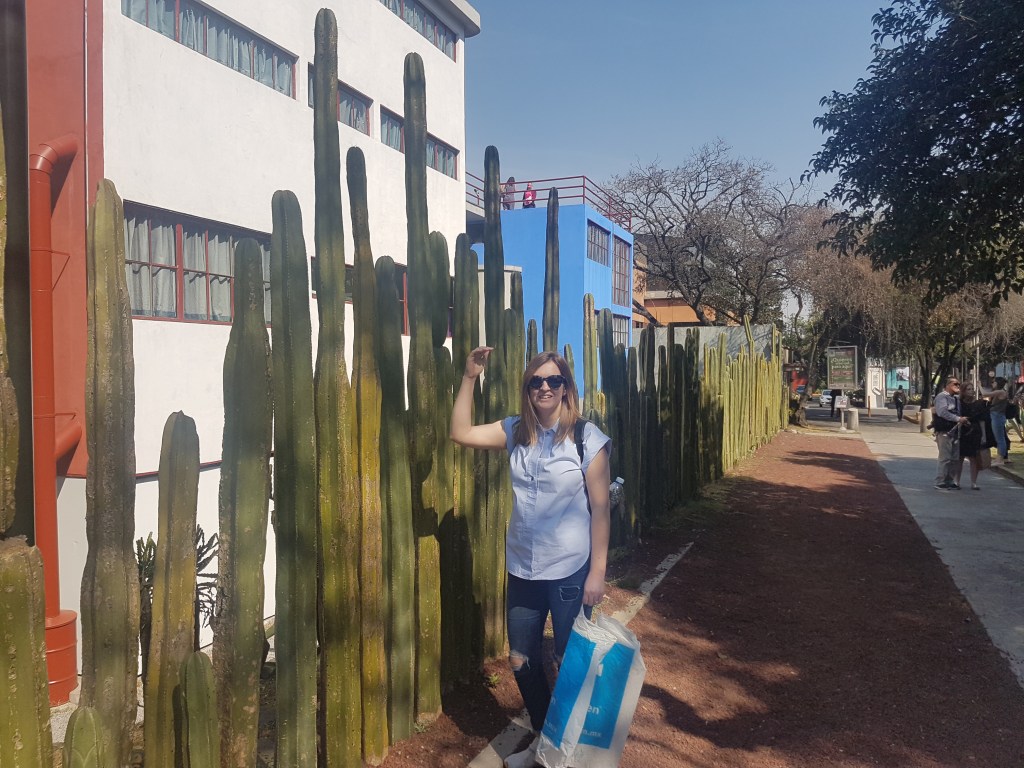
    After we enjoyed art shopping at El Bazaar Sabado and lunch (with a bottle of cava) at the San Angel Inn, we ventured across the street to visit the shared home and studio of the famous Mexican artists Frida Kahlo and Diego Rivera.

    We’d heard that the Frida Kahlo museum was famed for its long lines, so we opted instead to visit this less busy site. It was also conveniently close to the Bazaar. There were many more items on our to-do list for this trip than we were able to accomplish, partly because the city is just so big and there is so much to do. We had to adapt our plans and just do our best to see sites clustered within areas we visited.

    This blog post does a good job of summarizing the history and significance of the studio-house. Built in a neighbourhood dominated by Spanish colonial architecture, Diego commissioned a friend to built the house in a new, functionalist style, in contrast to its surroundings. This was following the Mexican Revolution, when there was a movement in the country to use art and design to foster national identity.

    Diego Rivera and Frida Kahlo are two of the most important and famous artists of the 20th century, and it’s not possible to visit Mexico City without thinking about them. The influence of their artwork was felt worldwide, but it’s especially poignant in their hometown.

    Even if you don’t know much about Kaho and Rivera, the museum is an interesting an inexpensive site to visit. Throughout the house/studio you can see different exhibits of their work and/of work that was influenced by them. It seemed as those these exhibits were rotated somewhat often.

    Below you can see photos of what we saw while we were visiting, including Diego Rivera’s studio and a variety of work related to his travels and political engagements.


  • Torres del Paine – III – Completing the Loop

    Torres del Paine – III – Completing the Loop

    Intro | Part I | Part II | Part III

    Day 7 – Campamento Italiano

    Map (link) | Distance: 7.5 km + 5 km | Time: 1.75 hours + 3 hours

    The hike from Paine Grande to Italiano is one of the shortest hikes in the park, designed so hikers can enjoy a “day hike” past Italiano to a pair of mountainside lookouts (Francés and Británico) which make up the middle leg of the “W”. Knowing this, we set out before sunrise hoping to maximize our daylight hours for the day hike.

    IMG-20180402-WA0091
    Awake really early on Day 7

    The hike to Italiano was fairly straight forward: we left the windy peninsula of Paine Grande and headed East across hillsides and streams, stopping periodically to admire a lakeside view. We arrived at camp fairly early (before many campers had even woken up), set up our tents, and checked in with the Ranger. The Ranger gave us some tips and directions, but informed us that the second lookout, Británico, was closed due to poor weather.

    The day hike is bit awkward: it travels along the mountain side so the footing is tricky, full of rocks and inclines. We reached Francés Glacier after an hour and rested a minute to appreciate our fourth glacier of the week. Then we actually continued on, hoping to see more (the weather in Patagonia changes so frequently that we hoped the trail would clear up, contrary to the Ranger’s recommendation). Unfortunately the wind and rain only worsened so we turned back before getting lost (or worse) and had warmed our hands drinking tea and cooking dinner to rest up before a long hike to Chileno the next day.


    Day 8 – Chileno

    Map (link) | Distance: 16 km | Time: 5.5 hours

    The hike to Chileno was an exhausting day. We got on the trail a bit later than usual (I slept in) and paid for it with a long hike through the middle of a hot afternoon. We started off in hilly lakeside grassland and forest, which were actually delightful in the morning hours (some of the lake views were incredible, and we passed the oft-photographed Cuernos).

    DSC02173
    Cuernos (Horns) del Paine

    However, we left the forest just as the sun was reaching its peak and began a 4-hour hike uphill through open grassland. Many stops for water and sunscreen later, we started to see the mountain range surrounding los Torres which helped to put a spring in our step and push us up the final hill to Refugio Chileno.

    After checking in we set up our tents, which involved a new twist for our last night. Because the campsite is built on the side of a mountain, every tent gets erected on a wooden platform using a hammer and nails instead of stakes!

    The campsite and lodge are beautifully nestled between a stream and mountain, under the gaze of los Torres. Dinner that night was included in our reservation, so we enjoyed some salmon, rice, and salad (real food!) before watching the sunset (what a view) and heading to sleep.


    Day 9 – Our Final Hike

    Map: (link) | Distance: 4 km + 2 km | Time: 2 hours  + 1.5 hours

    Over the course of eight days on the trail we grew into a pretty standard sleeping pattern: sunlight = awake. So we had fine tuned our ability to fall asleep and wake up early, but our last night really pushed us. Researching for the trip we learned that a must-do activity in the park is watching the sunrise at the Torres del Paine. Which means starting your final (2-hour) hike to the Torres well before any daylight arrives. For us, that meant setting an alarm for 4:45 am, sleeping in our hiking clothes, and eating a Cliff bar on the trail (no time for breakfast).

    The hike was a little tricky: everything was pitch black outside of our headlamps’ paths and we were navigating climbing switchbacks through a forest. Fortunately the trail markers contained reflectors, so we only got lost a couple times, and we made the summit fairly quickly. We were actually the very first group to reach the top! So we settled into our sleeping bags and broke out our celebratory chocolate.


    Truthfully we were hoping for a more dazzling display of light, but even in overcast weather it was a treat to watch the Torres greet the day. And what better place to sit and reflect than a peaceful glacial lake surround by mountain tops? Looking back, it was a quick week in which we’d graduated from being hiking rookies, bested the elements, and lived more than a handful of post-card-worthy moments.


    The rest of the day was a mostly wrap-up. After lunch at Chileno we headed downhill to the trailhead, celebrated with a beer, and boarded the bus back to Peurto Natales where hot showers and fresh food awaited. From there we enjoyed a couple great celebratory meals (Angelica’s is highly recommended) and began our journey back home.

    IMG-20180402-WA0085
    Success! (Not pictured: cervezas)
  • Torres del Paine – II – John Gardner and Glacier Grey

    Torres del Paine – II – John Gardner and Glacier Grey

    Intro | Part I | Part II | Part III

    Day 4 – Campamento El Paso (John Gardner Pass ⛰️)

    Map (link) | Distance: 8 km | Time: 7.5 hours

    We had been gently warned by the rangers that most hikers should leave camp around 7:30 am to climb the John Gardner Pass, so despite the rain and chill we were up and on the move early on Day Four. Luckily the rain had calmed down over night so packing our tents up wasn’t too messy and we set out on our relatively short but very steep hike (the Pass is the highest part of the trail, at just under 1,200 m).

    IMG-20180402-WA0089
    Early morning selfie


    The trail started out with the forest and dirt we’d grown accustomed to, but turned to rocky switchbacks before long. The rocks made our footing a touch unsteady, and more than once my wobbly ankles almost rolled. Fortunately the weather had blown out after its overnight outburst, so we had relatively clear skies to make our upward grind tolerable and we reached the pass in just a couple of hours!

    One of the great things about Torres del Paine is that it has so many beautiful features. Magazines often feature the Cuernos del Paine. Everybody makes time to visit the namesake Torres. And there are countless viewpoints and tours of Glacier Grey’s Southern tip. But for me, reaching the Gardner Pass takes the cake. There was something incredibly rewarding about climbing the 1,200 m and feeling exhausted but proud. Then just as you’re beginning to feel big, a king literally on top of the world, Glacier Grey slaps you in the face. You look out on a sheet of ice stretching further than you can even comprehend. It contains more white, greys, and blues than your eyes can register in its cracked surface and exposed depths. It stretches as far as you can see, ending only in purer and larger snow capped mountains. It was a truly humbling reminder that the Earth is just so much bigger than us. It’s just so much…ice.

    The rest of the hike is relatively less grand. You turn back South and start working your way downhill. The hills are steep but there are often handrails and steps, (though that didn’t stop my Bambi-like grace from taking the express route once or twice) and a few lookouts through the trees reminding you of the inescapable ice sheet.

    We arrived at Campamento El Paso in mid-afternoon a little tired from the day’s climb and pitched our tents before sitting about in the sun to warm up (the glacier is cold and we were tired). Dinner that night was a smaller affair as our “O-circuit” group had started to break apart as schedules diverged, but we still got to hear plenty of stories about Antarctic adventures and backpacking South America before we packed it in for the night.

    Day 5 – Refugio Grey

    Map (link) | Distance: 7 km | Time: 4.5 hours

    Looking back, our near-perfect experience climbing the John Gardner Pass was pretty special. Because of its proximity to the Glacier Grey, and Patagonia’s generally hectic weather, the pass is frequently closed by Rangers, especially late in the season (when we visited). To that point: the two days after to our climb the trail was closed, and another two days later it was shut for the season. We just squeaked through!

    Knowing this as we were reserving campsites we had actually bracketed in an extra day following the pass, and we awoke on Day 5 grateful for that. The weather had settled into a chilly rain (something to do with a giant glacier nearby?) and our legs were feeling some aches after the climb, so it was nice to start the day slowly. We hit the trail around 10 am after filling up on oatmeal and boiling enough water to brew our tea (Early Grey, hot).

    IMG-20180402-WA0086
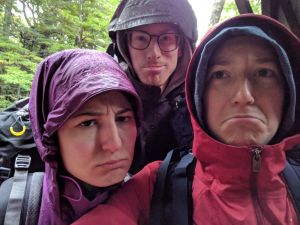
    Grumpy in the rain

    The trail to Refugio Grey was almost entirely downhill through the same cliff side forest we had encountered the previous day. The views looking out at the glacier were similarly impressive, if somewhat diminished by overcast skies. And thankfully we had the views to enjoy, because what was billed as an easy stroll down to Grey became bit of a mental battle. A little bit because of the weather, but mostly because of our knees not enjoying the downhill slog. Almost five hours later we reached Grey tired, grumpy, wet (and probably smelly, it’d been five looong days).

    But boy were we excited to arrive! Refugio Grey marks the Western start of the more built up “W Circuit” so in addition to camping spots and a cooking room, Grey had a full lodge complete with restaurant, bar, hotel, and spa. Hallelujah! We dropped our messy backpacks at the door and stumbled inside ordering “tres cervezas” and cheers’d to rejoining society! We spent the rest of the evening chatting with fellow hikers beside the fire place, enjoying a couple drinks, and honestly just appreciating the comfortable couch.

    Day 6 – Refugio Paine Grande

    Map (link) | Distance:  11 km | Time: 4 hours

    After an evening spent relaxing, Day 6 became the easier day we needed. It was another late morning as none of us set an alarm, andeven when we finally sorted ourselves out we didn’t hit the trail right away. Refugio Grey is considered the starting of the “W Circuit” because of its proximity to and scenic viewpoints of Glacier Grey. So before leaving we wandered out to take our last looks.

    Afterwards we hit the trail, heading south to Paine Grande, and though the skies were grey the worst of the clouds blew over and our hike was dry. Much of the trail looked like our first couple of days: long grass and stubby trees. Knowing the day’s hike was relatively short we took our time, stopping for photographs and snacks throughout the afternoon.

    Arriving at Paine Grande we were quick to understand how it earned the nickname “tent graveyard”. The lodge and campground are situated on a peninsula between two lakes, and wind gusts consistently threatened to uproot everything not bolted down. This was definitely our most nerve wracking tent set-up. Luckily our tents held on and, even though it was a noisy night, we woke early the next day with all our belongings!


  • Torres del Paine – I – The Backside

    Torres del Paine – I – The Backside

    Intro | Part I | Part II | Part III

    Day 1 – Campamento Serón

    Map: (link) | Distance: 13 km | Time: 4.5 hours

    Saturday morning was an early one. We had a 7 am bus ride to the park ahead of us, which meant getting up at dark o’clock and double checking our backpacks before heading out. Fortunately our hostel, the Erratic Rock, provides a warm breakfast every morning so we made our way to the bus full of homemade bread, oatmeal, and omelettes, if a little sleepy.

    The pre-dawn bus ride to the park let us see some brilliant scenes as sunrise played out on distant mountains, and by the time we were dropped off at the trailhead we were pretty excited. A final taste of normal (a muffin) in the gift shop and we were off!

    DSC01895
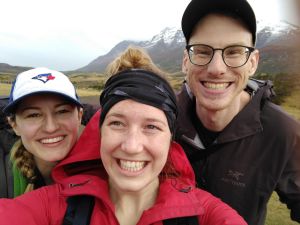
    Starting out, our first ‘climb’

    The first day of hiking was a nice ease into the routine. Our bags doesn’t hurt (yet), the hills were gradual, and the weather was fantastic. The shuttle-bus contingent quickly split up as every group found their pace, and soon enough the three of us were casually strolling through nature and sunny skies. The path to Campamento Serón is mostly hilly grassland on the Eastern periphery of the mountains, following a winding river North for much of the afternoon. It was funny at times to think we had just traveled two days  when the hike felt so similar to Ontario’s Bruce Trail. But every far-off mountain peak was a quick reminder otherwise, and we spent much of the afternoon taking breaks and doing our best Owen Wilson impressions (wow!).

    Our first night in camp was pleasant, if a little windy. As it was the first time setting up our new tents, we were happy to find spacious, level spots sheltered from the worst of the elements. We ate our first camp meals and chatted a little with our new “O Circuit” family of campers before settling in for the night with plans for an early rise.

    Day 2 – Refugio Dickson

    Map (link) | Distance: 18 km | Time: 7 hours

    Our first morning on the trail was a learning experience. Despite well meaning plans to rise early and head out after a quick bite, we didn’t actually start hiking until almost 10 am. Repacking your bag (from inside the tent) and disassembling a tent took longer than anticipated. We got much better on subsequent days.

    IMG-20180402-WA0087
    Day two selfie

    The trek to Dickson was quite similar to the previous day’s. We spent the morning following the same winding river and the weather remained promising with blue skies and puffy clouds stretching to the horizon. The biggest difference in the trail began as we turned West into the valley. The map noted that the trail would feature “Heavy Winds” at this point, and we were curious to find out what that meant. For me, it finally illustrated the expression “screaming winds” as a constant gale force wind rang in your ears and threatened to bowl you over for 2 km before we could descend into forest.

    The rest of the day was much tamer. We wandered the valley’s hillsides through forest and long grass. At times I was reminded of summers spent golfing back home, searching for my ball in the wild – unkempt – long grass, just with stubbier trees and prettier horizons. I even grew frustrated throughout the day as I sweated and chafed (I had been wearing my backpack improperly), a true callback to my golfing years!

    After a final climb we descended into Refugio Dickson, beautifully perched on the shores of a glacial lake (our first glacier sighting!). We set our tents up nestled within the trees (quickly learning to avoid the wind) and explored the campgrounds: rocky beaches on the lake, horses roaming freely, and communal buildings including a small store, showers, and lodge/cafeteria. This was the first night that our “O Circuit” family got to know each other, many of us stayed up chatting in the lodge until it was too dark to find our tent.

    Day 3 – Campamento Los Perros

    Map (link) | Distance: 11.8 km | Time: 6 hours

    Our second morning on the trail started off a bit smoother: our tents got packed smoothly and breakfast was quick. We were in the first half of campers to leave. So we had high hopes for the day, even if it looked like the weather was turning.

    IMG-20180402-WA0088
    You could feel the rain waiting to start…

    Admittedly, I didn’t have large expectations for Day Three’s hike. On the map it looked like a logistical shuffle that would require covering some distance and elevation, setting up hikers for the next day’s mountain climb at the John Gardner Pass. Fortunately I was wrong. It wasn’t an easy day; it featured a steady climb through mountain forests for the first half of the day, followed by a rocky trail testing your ankles in a windy valley. But the trek had some of the best views on the trail. The first half of the day climbed high, giving us great views looking back at Dickson Glacier (and Argentina), while the second half featured steady progress towards Los Perros Glacier and it’s beautiful green lake.

    Rain threatened for most of the day, but held off long enough for us to reach camp and pitch our tents. We were luckily gathered in the communal cooking room (a make shift building with three shared tables) when the rain finally hit. In the span of an hour we witnessed a downpour, hail, and snow, before it settled into a steady rain for the night. A few of our fellow campers were rained out, so we all spent some time helping move tents or dig moats to ensure everyone was safe before tucking in for a fitfull sleep (I thought every loud gust of wind would blow me away to Oz). Somehow this was one of my favourite nights, and we all awoke early the next morning ready to climb a mountain!